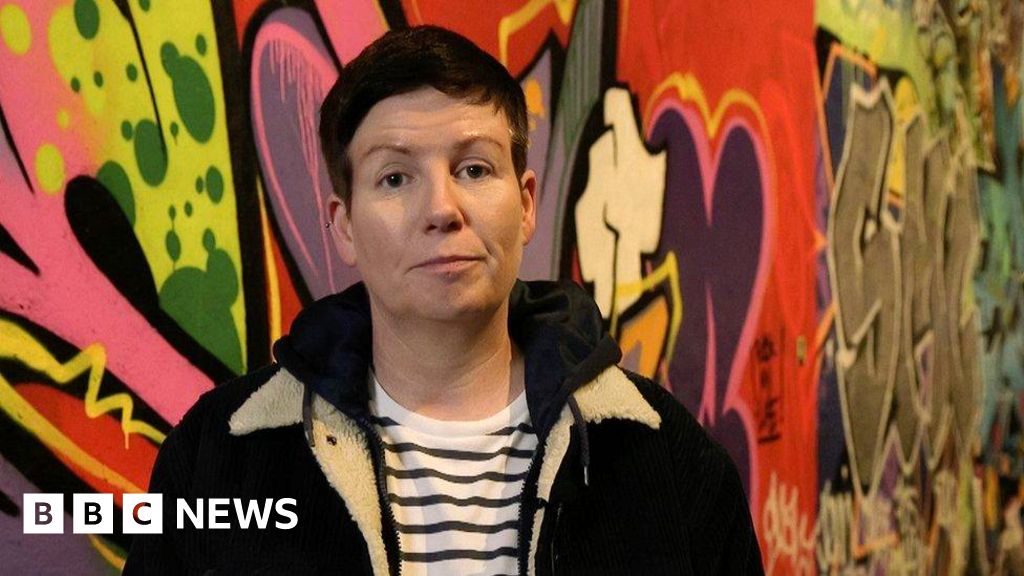
| From the Editor's Desk
Don't Approach Life Like a Picky Eater Try new things. Not too much. Mostly experiences.
Many parents of young children struggle to introduce new foods into their kids' diets. About half of American children are picky eaters by the age of two; they are, in the vernacular of nutritionists, "food neophobic." Our pediatrician once told me that one of our sons, who was a fussy eater, would need to try a new food at least six times before the taste would no longer fill him with fear and loathing. My wife and I wanted to fight our son's food neophobia for some practical, nutritional reasons, but more fundamentally, we wanted him to eat adventurously so he could enjoy this part of life. Openness to a wide variety of tastes and smells enhances the pleasure of eating.
This is an instance of a larger truth: Openness to a wide variety of life experiences, from visiting interesting places to considering unusual political views, brings happiness. "Only someone who is ready for everything, who doesn't exclude any experience, even the most incomprehensible," Rainer Maria Rilke wrote in his Letters to a Young Poet, "will himself sound the depths of his own being."
Continued here
TradeBriefs: Newsletters for Decision-Makers!
Advertisers of the day
Emeritus: PG Diploma in Innovation & Design Thinking online program | Accepting applications - Starts on June 30, 2021
Emeritus (with Columbia Business School): Accepting applications for the PG Diploma in Digital Marketing Strategies - Starts on June 8, 2021
Our advertisers help fund the daily operations of TradeBriefs. We request you to accept our promotional emails.
Want the newsletters, without the promotional mailers?
Get an (ad-free) subscription to TradeBriefs Premium for just $2 per month.
|
Life Life � | � |  | Life Life | � | | Life Life
� Life Life | � | | Life Life | � | | Life Life | � | | Life Life | � | | Life Life | � | | Life Life | � | | Life Life Life Life Life Life Life Work Work Work Work Work Work Work Work Work Work Work Work Work Work Work Work TradeBriefs Publications are read by over 10,00,000 Industry Executives |

Business Analytics for Strategic Decisions Programme | View online | Your support of promotional mailers like these (upto 2 per day) helps us keep the TradeBriefs newsletter free for you. Still wish to Unsubscribe? For inquiries/unsubscribe issues, Contact Us |
| | | | | | Business Analytics for Strategic Decisions | | | | Why study Business Analytics for Strategic Decisions? | | Companies are continually innovating how business is done as big data technologies become more prevalent and affordable. And as a result of increased innovation, more data is piling up. In order to leverage this data and make informed decisions, organisations of all sizes depend on the insight provided by business analytics. | | | | | |  | | DURATION | | 2 Months,4-6 hours per week | | | | | | | | | | | | | | In the NUS Business School's Business Analytics for Strategic Decisions programme, you can develop the knowledge and tools you need to gain a strategic advantage and impact your company's bottom line. As you work through the programme's Business Analytics Playbook, you will learn how to: | | Assess your organisation's level of data analytical maturity. | | | Identify existing yet untapped data sources for your organisation. | | | Specify ways to improve the accuracy of a model predicting a given business outcome. | | | Identify strategic, managerial, and/or organisational problems related to analytics in your organisation or industry. | | | Evaluate your organisation's data quality. | | | Articulate differences between causal and predictive analytics. | | | Evaluate the current data protection infrastructure of your organisation. | | | Identify pertinent AI risks for your organisation and regulations in your industry sector relevant to these risks. | | | | | | Faculty |  | | Jussi Keppo | | Faculty at NUS Business School | | | |  | | Prasanta Bhattacharya | | Faculty at NUS Business School | | | | | | Is This Programme Right for Me? | | If you want to expand your skills and expertise to improve functional performance through analytics or build business analytics capabilities to transform your organisation, this programme is right for you. Roles of participants may include, but are not limited to: | | Director/Head of Operations | | | | | | | Business, Data, or Financial Analyst | | | Business, Project, or Strategy Manager | | | Business, IT, Data, or Marketing Consultant | | | | | | | Flexible payment options starting from USD 588 available now. | | | | | | | NUS Business School is collaborating with online education provider Emeritus to offer a portfolio of high-impact online programmes. Working with Emeritus gives NUS Business School the advantage of broadening its access beyond their on-campus offerings in a collaborative and engaging format that stays true to the quality of NUS Business School. Emeritus' approach to learning is based on a cohort-based design to maximise peer-to-peer sharing and includes video lectures with world-class faculty and hands-on project-based learning. | | Emeritus Institute of Management | Committee for Private Education Registration Number 201510637C | Period: 29 March 2018 to 28 March 2022. | | | | | You are receiving this mailer as a TradeBriefs subscriber.
We fight fake/biased news through human curation & independent editorials.
Your support of ads like these (upto 2 per day) makes it possible.
If you still wish to unsubscribe, you can unsubscribe from all our emails here
Our address is 309 Town Center 1, Andheri Kurla Road, Andheri East, Mumbai 400059 - 122430405 |

If this mailer does not render correctly, please enable images or view online Advertise
Unsubscribe |
  
Highlighted Stories!
Now proven against coronavirus, mRNA can do so much more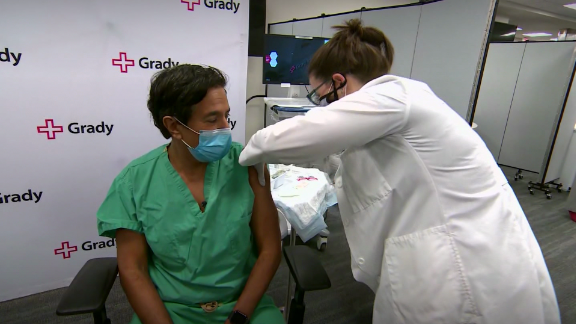 When the final Phase 3 data came out last November showing the mRNA vaccines made by Pfizer/BioNTech and Moderna were more than 90% effective, Dr. Anthony Fauci had no words. He texted smiley face emojis to a journalist seeking his reaction.
This astonishing efficacy has held up in real-world studies in the US, Israel and elsewhere. The mRNA technology -- developed for its speed and flexibility as opposed to expectations it would provide strong protection against an infectious disease -- has pleased and astonished even those who already advocated for it.
The messenger RNA, or mRNA, platform may be new to the global public, but it's a technology that researchers had been betting on for decades. Now those bets are paying off, and not just by turning back a pandemic that killed millions in just a year.
This approach that led to remarkably safe and effective vaccines against a new virus is also showing promise against old enemies such as HIV, and infections that threaten babies and young children, such as respiratory syncytial virus (RSV) and metapneumovirus. It's being tested as a treatment for cancers, including melanoma and brain tumors. It might offer a new way to treat autoimmune diseases. And it's also being checked out as a possible alternative to gene therapy for intractable conditions such as sickle cell disease. |
� | � | | |
What would happen if the world stopped shopping? 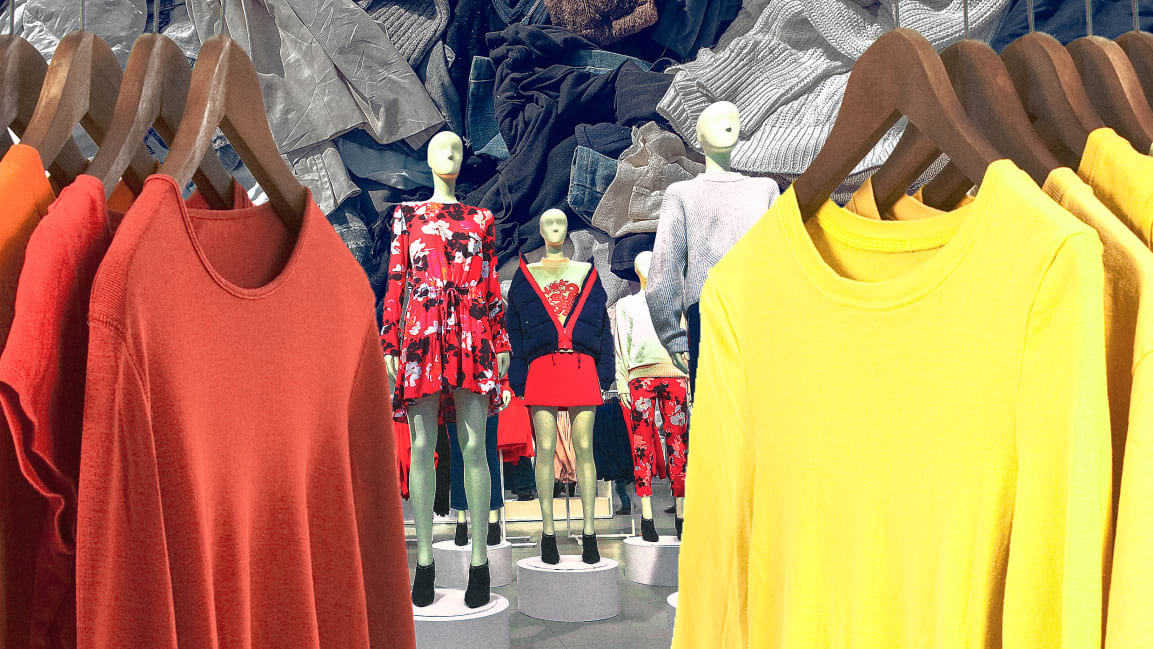 Fast fashion is destructive and exploitative - and yet millions of people rely on it for work. In a new book, J.B. MacKinnon explores these complexities.
The 21st century has brought a critical dilemma into sharp relief: we must stop shopping, and yet we can't stop shopping.
At the turn of this new millennium, according to the UN, consumption surpassed population as our greatest environmental challenge. When it comes to climate change, species extinction, water depletion, toxic pollution, deforestation and other crises, how much each one of us consumes now matters more than how many of us there are. The average person in a rich country consumes 13 times as much as the average person in a poor one.
For decades now, we've witnessed a near-continuous increase in the consumption of every major natural resource. We are using up the planet at a rate 1.7 times faster than it can regenerate. At this rate, by 2050, resource use will have tripled in the 21st century alone.
Fast fashion is one of the worst offenders. We didn't demand it, but we did take to it with enthusiasm. The number of garments sold each year has approximately doubled in the last 15 years and now exceeds 100 billion. |
| � | | |
The Super Rich Are Choosing Singapore as the World's Safest Haven Money is sloshing around Singapore like never before. Family offices, Bentley sales and real estate prices are booming.
When Singaporean car dealer Keith Oh first read the Facebook message, he wasn't sure it was real. A Chinese client ordered a S$1.1 million ($830,000) Bentley—sight unseen—over the social network.
"They just asked for the price and when we could do the delivery, that's all," he said. "It's a million dollars to us but it's probably nothing to them."
The quick sale was the latest sign of a wider trend: Money is sloshing around Singapore like never before. As the coronavirus pandemic hammers Southeast Asia and political turmoil threatens Hong Kong, the city has become a safe harbor for some of the region's wealthiest tycoons and their families. |
The woman who walked around the world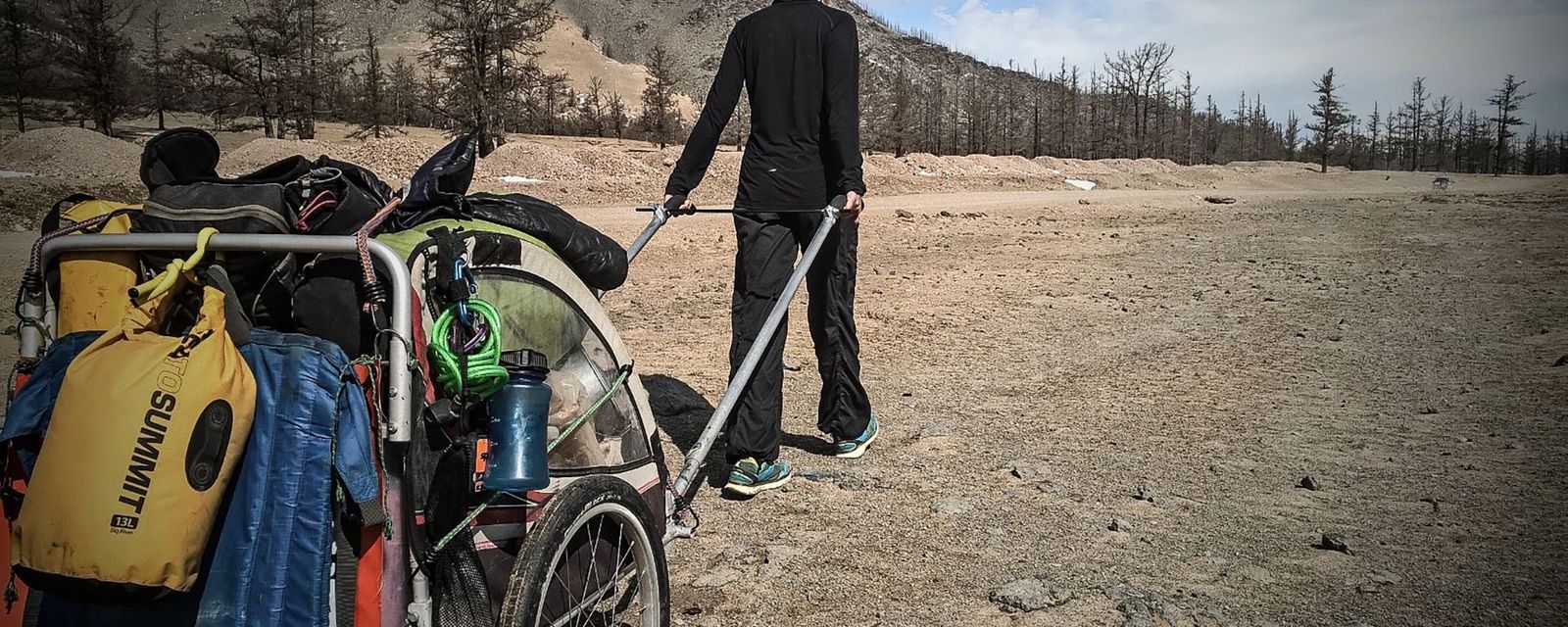 Seeking a deeper connection to the world, Angela Maxwell set off to walk it alone. Six years and 20,000 miles later, she brought that connection home.
"Why?" It's a simple question, and one that people ask Angela Maxwell frequently. Yet until recently, the American struggled to answer why, exactly, she upended a perfectly fine life in pursuit of a big dream. But for Maxwell, "why" is a question worth answering. After all, she embarked on a journey that very few people attempt: in 2013, she decided to walk around the world – alone.
A solo walk of this magnitude wasn't something Maxwell had planned. In fact, she left only nine months after having overheard a conversation in her art class about a man who supposedly walked around the world.
Maxwell's journey did not sprout from a place of loss, defeat or personal crisis. When she decided to embark on a long-distance walk, she was in her early 30s, ran a successful business and was in a relationship. "I thought I was happy," she said, "but in retrospect, I realised that I was searching for more… for a deeper connection with nature and people – by living on less and connecting with the world around me."
Angela Maxwell suffered from sunburn blisters and heatstroke in the Australian desert and dengue fever in Vietnam. |
| � | | |
CEO Picks - The most popular editorials that have stood the test of time! Harvard study: Want to be less depressed? Wake up earlier  Researchers analyzed genetic data on 850,000 people through the company 23andMe, 38% of whom had worn sleep trackers or filled out sleep questionnaires.
The early bird catches the worm and is way less melancholy about worm availability and options. This is the finding of a new study from researchers at Harvard, MIT, and the University of Colorado at Boulder, who explored whether waking earlier lowers depression risk.
Scientists have long known that people who wake up earlier tend to be less depressed: Night owls, who make up around 10% of the population, are twice as likely to suffer from depression. But scientists did not know what sleeping hours make a difference, and the information came mostly from questionnaires, not observation. So researchers analyzed genetic data on 850,000 people through the company 23andMe, 38% of whom had worn sleep trackers or filled out sleep questionnaires. |
| � | | |
What's Your Sales Automation Strategy? In this article, we examine sales automation's benefits, how it can be applied to standard processes, and how to adopt new processes to improve your team's ability to sell. We also detail five key principles for building and executing on your sales automation strategy.
Faced with profitability challenges, a global consumer electronics firm decided to restructure its business with a focus on optimizing costs, sales productivity, and customer satisfaction. To achieve these goals, the company automated customer and product master data, disputes and claims resolution, stock replenishment, and discount management. The firm also deployed automated web-crawler tools to improve competitive intelligence-gathering. With buy-in from leadership, the company was able to reduce the cost of select processes by 15% in only three years. |
| | � | | |
TradeBriefs Publications are read by over 10,00,000 Industry Executives |

|
|
|
|
|
|
|
|
|
|
|
|
|
|
|
|
|
|
|
|
|
|
|
|
|
|
|
|
|
|
|
|
|
|
|
|
|
|
|
|